
Science & anomalies
Ozone depletion from descending nitrogen oxides
historical scientific hypothesisEvidence status
1986 observations of low nitrogen dioxide argued against this explanation.
Editorial assessment of this proposition; not a numeric confidence score.
Claim or proposition being examined
Mesospheric nitrogen oxides transported downward explain the Antarctic ozone hole.
Limitations
Inclusion documents a claim; no independent truth inference from circulation. Category must remain visible.
Catalog review date reported: 2026-10-28. This is inherited catalog metadata, not a new verification of the linked source.
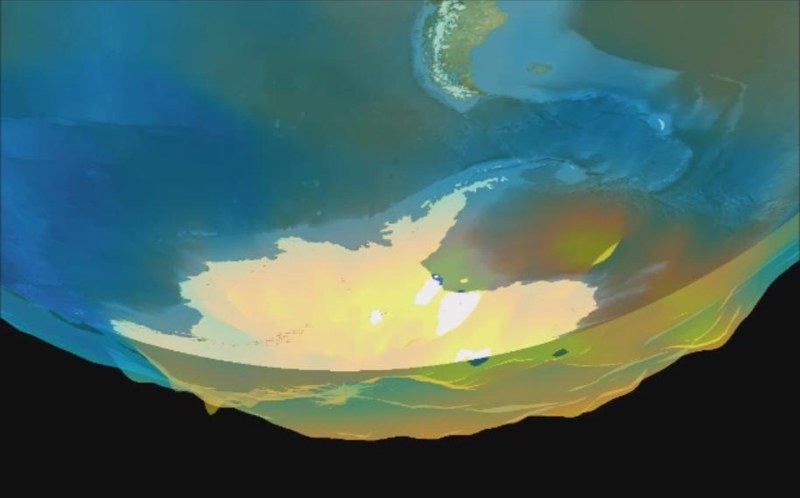
Scientific visualization of 2014 Antarctic ozone depletion from AIRS data; not an opening in the ice or Earth. NASA/JPL-Caltech Scientific source ↗
Image source record
Image rights and evidence limits
NASA media guidelines permit factual educational/informational website use; no third-party copyright notice in item metadata. Do not imply endorsement.
Image existence does not prove a linked claim. Consult image-specific captions and reuse conditions.
Sources and what they support
Links document the record, the claim’s circulation, an assessment, or reuse terms as labeled. A source link is not automatically corroboration.
- claim documentation or assessmenthttps://mark4sun.jpl.nasa.gov/mcm86.html
- Scientific visualization context, not proof of speculative interpretationhttps://images.nasa.gov/details/PIA20664
Explore the same topic
- science misinterpretation
ANITA as proof of a backward-time universe
Anomalous observations did not establish this conclusion.
- optical-phenomenon interpretation
Antarctic sunlight reflects off a solid firmament
Teyit identified ice halos and sundogs, not evidence of a solid dome.
- anomaly interpretation
Bloop as an unknown giant animal
NOAA identifies an Antarctic icequake, not an animal.
- supported scientific explanation
Chlorine and bromine ozone destruction
Supported by measurements; included separately from conspiracy claims, not an unresolved mystery.