
Menu

The Antarctic briefing

News from the
far south.

New observations. Field reports. The sources behind the story.

Manually reviewed

A curated selection, not a live feed.
No automatic updates or popularity ranking.

Latest selection

8 stories · newest first

University of MelbournePublished

Southern Ocean observations reveal a saltier, denser water layer (opens in a new tab)

A Melbourne-led study finds that Antarctic Intermediate Water became saltier, denser and deeper from 2016 to 2024, reversing an earlier trend. Researchers link the shift to reduced seasonal sea-ice meltwater; wider effects on circulation and heat storage remain uncertain.

Ocean scienceObservational study
Context & image credits

The measured changes concern Antarctic Intermediate Water over 2016–2024. Broader circulation and climate consequences remain uncertain; they are not direct observations of a future global outcome.

Image: This is a text-only story. No publisher photograph is reproduced.
NASA Earth ObservatoryPublished

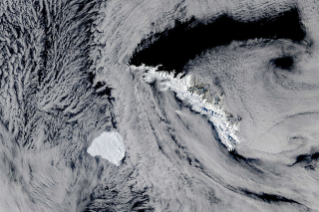
Satellite image tracks iceberg A-81 near South Georgia (opens in a new tab)

A Terra satellite image shows A-81 near South Georgia after its journey out of the Weddell Sea. The iceberg's movement had slowed near the island's underwater shelf. It originally separated from Antarctica's Brunt Ice Shelf in January 2023.

Satellite watchSatellite observation
Context & image credits

This satellite image documents one iceberg at one time. Iceberg calving is a normal ice-shelf process; this event alone does not establish a climate tipping point.

Image credit: NASA Earth Observatory/Michala Garrison. MODIS data: NASA EOSDIS LANCE and GIBS/Worldview. Reused under NASA Earth Science guidance (opens in a new tab). No endorsement implied.

Observation date: 20 Oct 2026; separate from the publication date above.

Satellite view of iceberg A-81 southwest of South Georgia on October 20, 2026.
NASA Earth Observatory/Michala GarrisonObservation: 20 Oct 2026
British Antarctic SurveyPublished

New Antarctic field season brings penguin counts and underwater robots (opens in a new tab)

BAS has begun its 2026/27 field season, with its icebreaker heading south and aircraft arriving at Rothera. Planned work includes aerial surveys of roughly 200 penguin colonies, whale monitoring and autonomous-robot investigations beneath Antarctic waters.

ExpeditionsResearch programme
Context & image credits

This is an institutional field-season announcement. Surveys and robotic investigations are planned activities, not results already obtained.

Image: This is a text-only story. No publisher photograph is reproduced.
Australian Antarctic ProgramPublished

Australia's icebreaker heads south with Davis station upgrade equipment (opens in a new tab)

RSV Nuyina departed Hobart with 90 passengers and more than 950 tonnes of cargo for the new Antarctic season. The voyage supports Davis station upgrades, while the wider science program includes environmental restoration, biodiversity surveys and deep ice-core drilling.

Expeditions & infrastructureProgramme announcement
Context & image credits

This is an operational departure report. It does not confirm arrival or completion of the station upgrades, and the deep ice-core work is a research goal rather than an already recovered million-year record.

Image: This is a text-only story. No publisher photograph is reproduced.

NASA Jet Propulsion LaboratoryPublished

Grounding-zone model raises estimates of Thwaites’ sea-level contribution (opens in a new tab)

A model that lets seawater penetrate beneath grounded ice reproduces Thwaites’ past retreat more closely. Some simulations put its sea-level contribution by 2100 at up to twice earlier estimates. This is a projection, not a measurement of future ice loss.

Ice scienceModel study
Context & image credits

This is a different study from the ocean-cooling experiment below. “Twice” describes some model comparisons, not a doubling of all global sea-level rise. The linked NASA report was published on 20 October, even where later coverage repeated it.

Image: This is a text-only story. No publisher photograph is reproduced.

British Antarctic SurveyPublished

Model experiment finds persistent Thwaites ice loss after ocean melt stops (opens in a new tab)

Three models kept Thwaites Glacier losing ice through a 150-year experiment even after ocean-driven melting was switched off. The deliberately unrealistic scenario tests the glacier's response to past change; neighboring Pine Island Glacier behaved differently.

Ice scienceModel experiment
Context & image credits

The experiment deliberately switches off ocean-driven melting to test the glacier’s response to past change. It is not a realistic forecast, a dated collapse prediction, or evidence that future emissions no longer matter.

Image: This is a text-only story. No publisher photograph is reproduced.

NASA Earth ObservatoryPublished

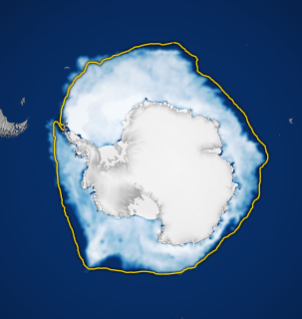
2026 Antarctic winter sea-ice maximum ranks third lowest (opens in a new tab)

The 2026 winter maximum covered an estimated 17.59 million square kilometres on September 14, ranking third lowest in the satellite record. The accompanying maps track seasonal sea-ice changes; they do not measure the mass of Antarctica's land-based ice sheet.

Sea-ice monitoringSatellite-data report
Context & image credits

The record concerns seasonal sea-ice extent, not the mass of the land-based Antarctic ice sheet. The maximum date is separate from this article’s publication date.

Image credit: NASA Earth Observatory/Michala Garrison. National Snow and Ice Data Center. Reused under NASA Earth Science guidance (opens in a new tab). No endorsement implied.

Observation date: 14 Sep 2026; separate from the publication date above.

Map of Antarctic sea-ice extent on September 14, 2026, with the 1981–2010 median outlined.
NASA Earth Observatory/Michala GarrisonObservation: 14 Sep 2026
British Antarctic SurveyPublished

Surveys reveal steep chinstrap penguin decline on Zavodovski Island (opens in a new tab)

Aerial and satellite records indicate a 63% drop in occupied chinstrap penguin nests on Zavodovski Island between 2011 and 2025. BAS researchers connect the decline to shifting food availability, while macaroni penguins on the same island followed a different trend.

WildlifeEcological study
Context & image credits

The 63% change is in occupied chinstrap nests at Zavodovski between 2011 and 2025. It is not a count of all Antarctic penguins; a proposed future conservation category is not a current listing.

Image: This is a text-only story. No publisher photograph is reproduced.