
Why open water persists beside Antarctic sea ice
A coastal polynya is an area of open water within sea ice. In Terra Nova Bay, katabatic winds drive ice away from shore, while the Drygalski Ice Tongue influences its return. This dated Aqua MODIS image illustrates the setting described in the source explanation.
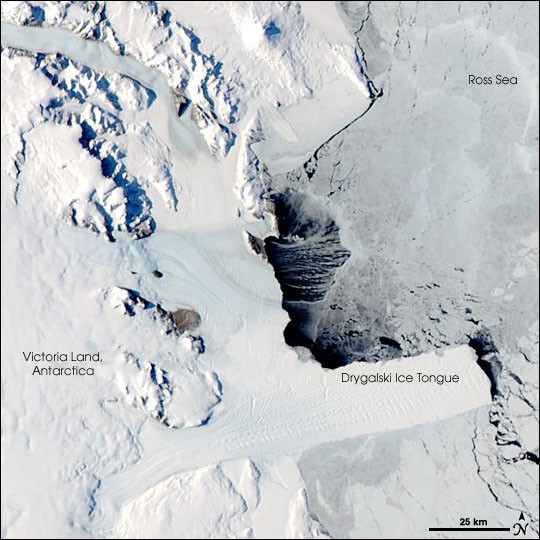
NASA MODIS Rapid Response Team, Goddard Space Flight Center; Aqua observation, 16 October 2007.
NASA educational/editorial media guidance; agency credit retained, no NASA endorsement implied. No image-specific third-party restriction observed.
Research context
The observation shows open water beside extensive ice. The source attributes its persistence to wind-driven ice removal and local geography. This is scientific context for interpreting images, not a newly documented conspiracy claim.
What this does not establish
A single image does not measure a long-term climate trend. Coastal and open-ocean polynyas can form through different processes; this explanation should not be generalized to every Antarctic opening. Observation date is 16 October 2007; article publication date is 18 October 2007.